UX Design — 01 Overview
Clubleaf × IceMobile
Providing Picnic customers with the option to make more sustainable choices.
My contribution — team of 4
- Did
- Desk research, field research, and usability testing; contributed to the design work.
- Collaborated on
- The three proposed concepts and the Sustainable Saving Card were developed together as a team.
- Already decided
- The brief — designing for Clubleaf × IceMobile within Picnic's app — was set as part of the assignment.
Scenario
We aim to empower customers to make sustainable choices without feeling pressured.
Using tools like infographics, the goal was to inform shoppers about sustainability, reduce confusion, and alleviate greenwashing fears by providing transparency about production processes and certifications.
Research
Picnic's assortment features numerous non-sustainable products, with limited visibility or promotion of sustainable options. I led the research behind these findings: desk research and trend analysis, field research through interviews and observations, and later usability testing on the concepts — including A/B and street tests in Rotterdam.
Insights
- 43% of consumers do not actively consider product sustainability while shopping — a significant awareness gap.
- Shoppers responded better to simple icons than to video, preferred a familiar vertical-scroll layout, and pushed back on anything that felt like sustainability was being forced on them rather than offered.
- Clubleaf's own business model buys carbon credits — one credit per ton of CO2 reduced — and helps partner companies build customer loyalty around that through reward mechanics. Aimed at a target group of cohabiting 25–35 year-olds, that model became the constraint we designed against: any concept had to plug into a rewards structure Clubleaf could actually fund.
Ideation
To promote sustainability in grocery shopping, we developed three concepts. "Know Your Groceries" educates consumers about product production through digital tools like videos and illustrations. "Choose Your Emissions" encourages selecting sustainable alternatives with subtle guidance. "Motivation through Extra Information" uses visualizations to show the climate impact of products, inspiring informed choices.
The concept came together under one line: "Save your wallet, save the planet." Sustainability had to pay for itself, not just feel good.
Sustainable Saving Card & CO2 meter
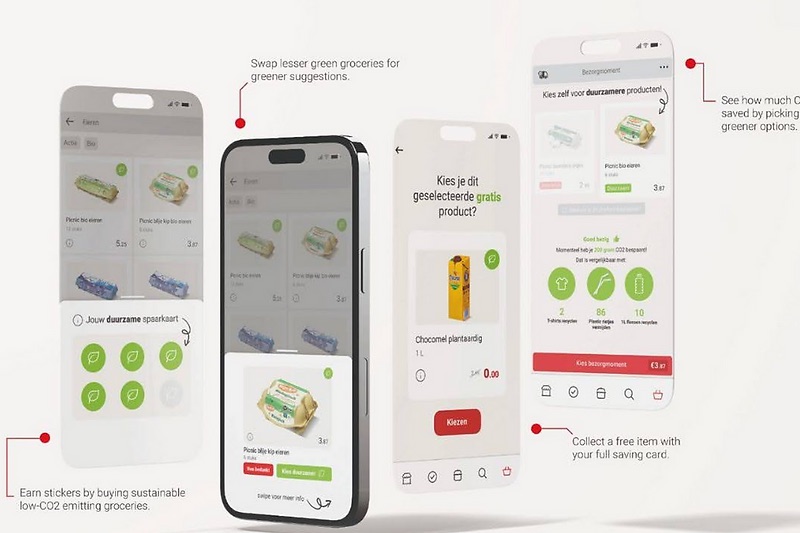
The Sustainable Saving Card rewards consumers with stickers for adding sustainable products to their cart. Once the card is full, customers can redeem it for free sustainable products, offsetting higher prices. A clear icon highlights sustainable options, discouraging corporate greenwashing.

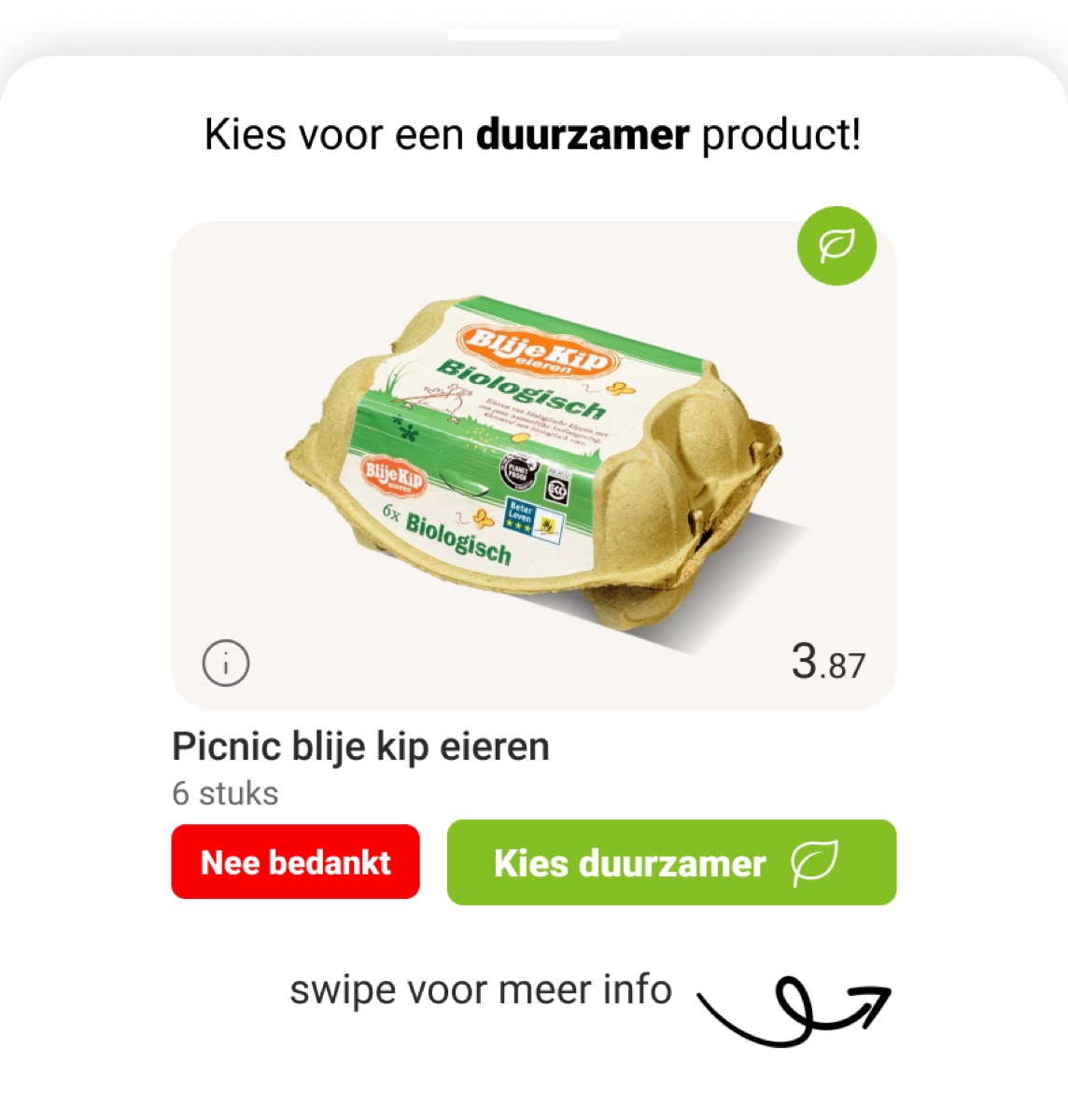
A pop-up suggests sustainable alternatives to customers who haven't chosen any yet, with infographics that build trust and help combat greenwashing.
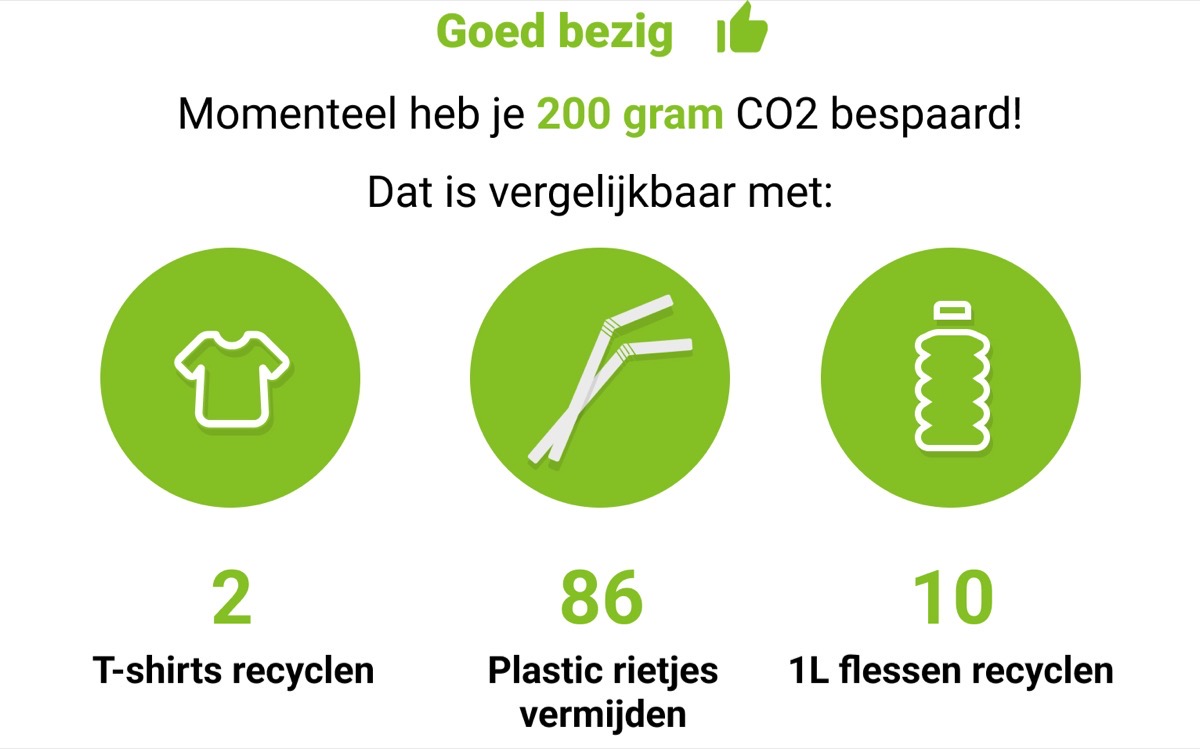
Shoppers can also track the amount of CO2 or plastic they've saved, with comparisons to everyday items like T-shirts, straws, or bottles.
Testing
The Saving Card, pop-up, and CO2 meter were shaped and validated through the same A/B and street testing described earlier: shoppers responded to simple icons over video, a familiar scroll pattern, and rewards that felt offered rather than forced.
Outcome
The Sustainable Saving Card, the pop-up, and the CO2/plastic-savings tracker were delivered as a four-person course project for Clubleaf × IceMobile within Picnic's app; I don't have post-handover deployment metrics to report here.
Reflection
The brief started as an awareness problem — "empower customers without pressuring them" — but the testing kept pointing somewhere more pragmatic: shoppers didn't need more convincing that sustainability mattered, they needed it to cost them less. "Save your wallet, save the planet" only became the concept's spine once we let go of the assumption that the fix was informational.